
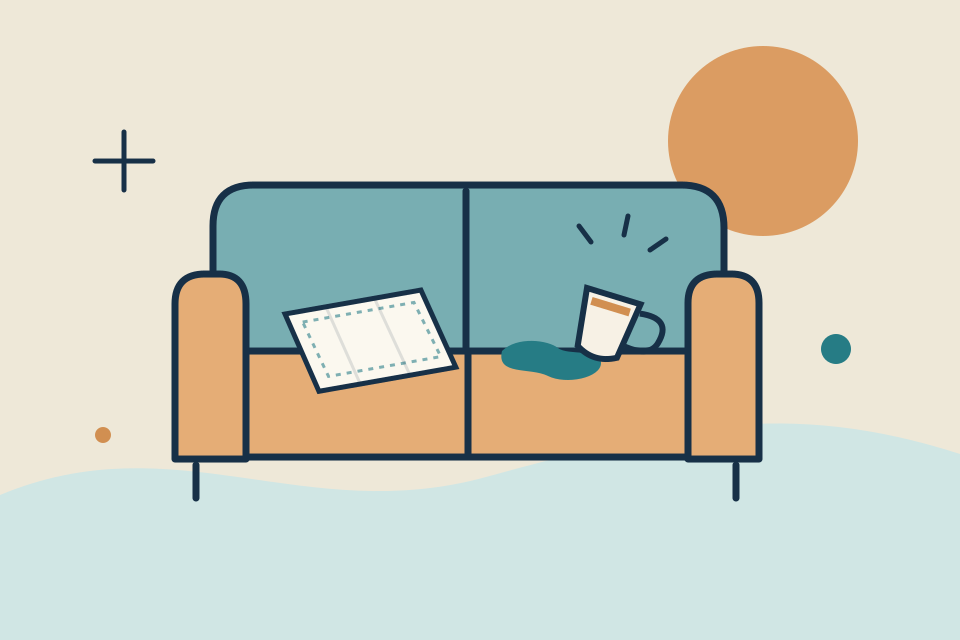
Blot first. Check the label before adding water or a cleaning product.
For everyday food and drink spills on fabric upholstery. Leather, suede, mold, flood damage, and bodily-fluid contamination need different advice.
Start with a dry cloth
Move the cup or plate out of the way. For liquid on the surface, gently press a clean, dry, absorbent cloth against the spill, then lift it away. Move to a clean part of the cloth as it picks up liquid. Avoid scrubbing or spreading the wet area.
For a thicker spill, carefully lift the excess with a spoon or other blunt edge without forcing it into the weave. Keep your first response simple: you do not need a homemade cleaning mixture to begin. Sunbrella’s spill guidance and Carl Hansen’s textile guidance both emphasize removing the spill promptly and gently.
Pause before treating the mark
Find the manufacturer’s care instructions, often on a tag under a cushion or beneath the furniture. A fabric’s appearance is not enough to choose a cleaner. Photograph the label and identify the exact sofa or fabric if you can.
If the instructions are missing or unclear, stop after the dry first response and ask the manufacturer or an upholstery professional. A water-based spot cleaner may be suitable for one sofa and unsuitable for another. Our care-label guide explains the common codes.
If treatment is permitted, test it first
Use only the method and product allowed by the furniture instructions, and follow the cleaner’s label too. Test an inconspicuous area before treating the visible mark. Let the test area dry so you can check the color and texture.
Use the specified amount rather than adding extra product. Avoid soaking the fabric or allowing liquid to pool at seams. Follow any instructions for removing residue; do not turn “rinse” into permission to flood a cushion. Stop if you see color transfer, a spreading ring, or an unexpected texture change. Maharam’s Zither instructions illustrate why testing, moisture control, and fabric-specific guidance matter.
Skip the improvised rescue
Do not jump from one cleaner to another, or add bleach, vinegar, alcohol, or a powder because an online tip worked on somebody else’s sofa. “Natural” does not establish compatibility with your fabric.
Never mix bleach or disinfectants with other cleaners. The CDC warns that these mixtures can release dangerous vapors. Avoid using a hot iron or steam as a stain-removal shortcut unless the exact furniture instructions explicitly allow it.
Know when to stop
A large spill, a soaked cushion, a persistent mark, or delicate upholstery is a good reason to seek advice rather than repeat spot treatments. Save the name of the spill, when it happened, photos, and the names of anything already applied. These details are more useful than guessing at the stain.
Prompt action can help, but it does not guarantee complete removal. Keep the item out of use until it has dried as instructed. For general drying planning, see our drying guide.
Sources & scope
Manufacturer guidance checked November 8, 2026. Product-specific examples are not instructions for every fabric. Your furniture’s current care instructions take priority.
- Sunbrella: Upholstery care and cleaning
- Carl Hansen & Søn: Textile maintenance and care
- Maharam: Zither maintenance guidelines
- CDC: Cleaning and disinfecting with bleach
General care information, not an assessment of your particular item.